
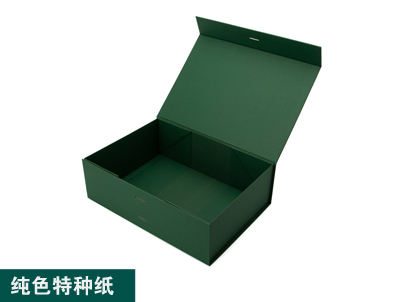
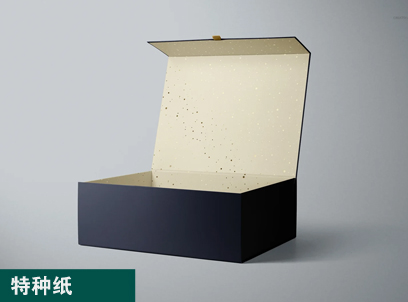
A magnetic closure box solves one specific problem: how to keep a lid shut without a ribbon, a lock or a visible fastener. Small magnets sit inside the board, hidden under the wrap, and the lid snaps closed with a short pull and opens with one hand. It reads as expensive because the closing action has weight to it — the resistance, then the release.
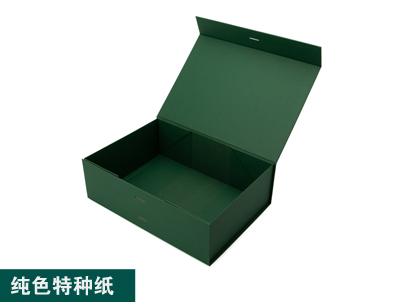
Magnet count and strength follow box size
The most common mistake is specifying magnets by habit rather than by size. Too few and the lid drifts open in transit; too many and the box becomes difficult to open, which buyers complain about more often than they complain about the opposite. GDF matches magnet count and grade to the lid weight and the panel area, and we test the closure on a real sample before tooling — a white dummy cannot confirm this, because it has no magnets fitted.
Position matters as much as count. Magnets set too close to the edge leave a visible bulge under the wrap on thin boards, and on a wide lid the corners lift even when the centre holds. Two smaller magnets placed symmetrically usually outperform one large one on any lid wider than roughly 200mm.
| Lid size | Magnets | Placement | Result |
|---|---|---|---|
| Under 150mm | 1 pair | Centre of closing edge | Light pull, opens easily |
| 150–250mm | 2 pairs | Symmetric, inset from corners | Balanced hold, no corner lift |
| 250–350mm | 2–3 pairs | Spread across the width | Firmer close, two-hand open |
| Above 350mm | 3+ pairs | Corners plus centre | Heavy close, needs grade review |
Recyclability: what magnets mean under PPWR
Magnets are the part of this structure that recyclers notice. A rigid box is largely paper and board, which streams cleanly; a steel magnet buried under laminated wrap does not separate in standard pulping. Under PPWR, packaging is graded on recyclability, and mixed-material components that cannot be separated lower that grade. This does not make magnetic boxes non-compliant, but it does mean the design should allow the magnet to be removed or the panel to be separated without specialist tools.
Two practical approaches keep the structure recyclable. The first is a magnet pocket that opens along one edge, so the magnet can be pulled out before the board is recycled. The second is minimising magnet size — using the smallest grade that still holds the lid — which reduces the metal content per unit. Both are worth raising at the design stage, because neither can be added after the board is cut.
Standard specifications
| Item | Standard range | Notes |
|---|---|---|
| Structure | Hinged lid, hidden magnet closure | Single or double door available |
| Greyboard weight | 1000g – 1800g | Thicker board hides magnet profile better |
| Magnet grade | Matched to lid size and weight | Confirmed on a fitted sample |
| Wrap paper | Coated art / textured / soft-touch | FSC-certified stock on request |
| Insert options | EVA, foam, paperboard, moulded pulp | Quoted against the actual product |
| MOQ | 500 pcs | Fixed tooling is the reason |
| Bulk lead time | 7–12 working days | Magnet fitting adds handling time |
Four things to confirm before ordering
First, whether the closing force suits the end user — a box for elderly shoppers or children should open with one hand, and that means fewer or weaker magnets than a luxury display piece. Second, ask how the magnet is fitted and whether it can be separated for recycling; this is increasingly a written requirement in EU tenders. Third, confirm the wrap thickness over the magnet, since thin paper over a strong magnet shows a ring. Fourth, test the closure on a fitted sample rather than a white dummy, because the magnet is the one component a white dummy does not carry.
Related reading: Rigid Box vs Folding Carton / EU PPWR & FSC / Hot Foil vs Spot UV vs Embossing / White Dummy Sample
<p
Other structures: Rigid Gift Box | Drawer Box | Book Style Box | Flat-Pack Folding Box
GDF — send lid dimensions and product weight, and we will specify the magnet count rather than guess it.
Phone/WeChat: +86 15813892599 (Mr. Deng)
www.szgoldy.com